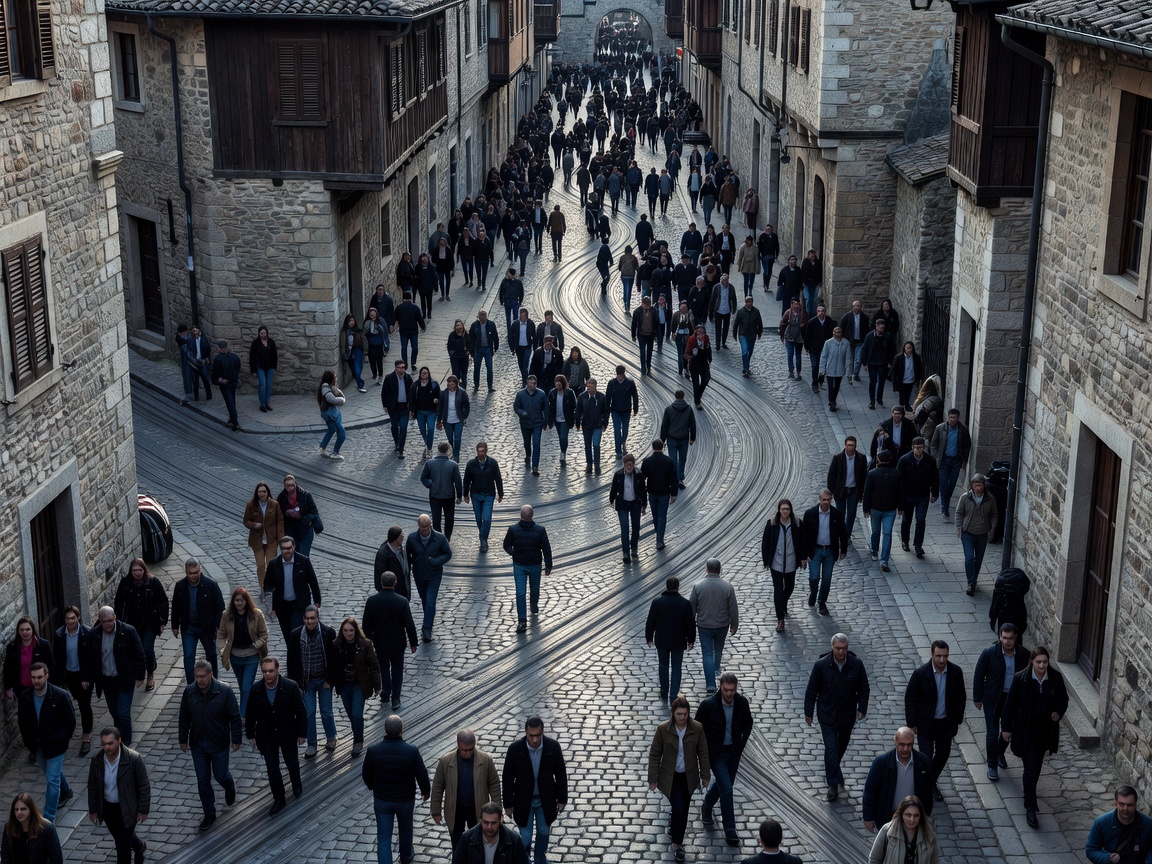
The street is the primary stage. Carnival brings private celebration into public space. Processions dictate crowd movement. Music establishes the rhythm of the event. Understanding parade structures helps visitors navigate the chaos safely.
Procession Formats
Formats vary drastically by region.
- Linear Parades: Move from point A to point B. Heavily organized. Feature massive floats, marching bands, and barricaded viewing areas.
- Circular Processions: Loop around central town squares. Often unbarricaded. Blur the line between participant and spectator.
- Dispersed Street Performance: No set route. Small groups of musicians or masked performers wander alleys independently, surprising crowds.
Music and Noise
Acoustics define the atmosphere. Western regions deploy massive brass bands. Rhythms are organized and rehearsed. Conversely, alpine traditions utilize heavy cowbells strapped to the body. The goal is to generate deafening, chaotic noise to drive out winter spirits.
Silence is rare. The relentless soundscape requires endurance from spectators.
Local Participation
Community involvement dictates the tone. In major cities, parade construction is a year-round industrial effort managed by formal committees. In villages, participation relies on family lineage.
Interaction with the crowd is common. Performers may throw confetti, distribute produce, or engage in mock combat. Spectators must accept this interaction gracefully. Refusing participation breaks the social contract of the event.
Spectator Etiquette
1. Do not impede the route. Unbarricaded parades require crowds to compress quickly when performers approach.
2. Do not touch traditional masks or costumes without permission. Many represent significant financial and historical value to the wearer.
3. Accept chaos. Unpredictable movement, loud noise, and minor physical contact in dense crowds are standard components of street celebration.
Differences Between Organized and Local
Organized municipal parades charge admission for grandstand seating. They operate on tight schedules. Local customs happen spontaneously in taverns and side streets. The best cultural experiences often occur after the official parade concludes, when guilds disband and celebrate privately in public squares.
Always respect local boundaries. If an event feels closed to outsiders, observe quietly from a distance.